third party risk
BusinessContinuity
posturemanagement

The latest EU AI Act news matters most to companies outside the European Union, especially African enterprises with European customers. On the 2nd of August, 2026, most of the EU AI Act becomes enforceable. That's six weeks away, but many African enterprises with European touchpoints are yet to categorize which of their AI systems fall under it, and some do not realize the regulation applies to them at all.
This guide walks through what the EU AI Act is, who it applies to, its obligations, how it intersects with African data protection laws, and how to prepare in time. Use it to identify your exposure and begin your compliance work immediately.
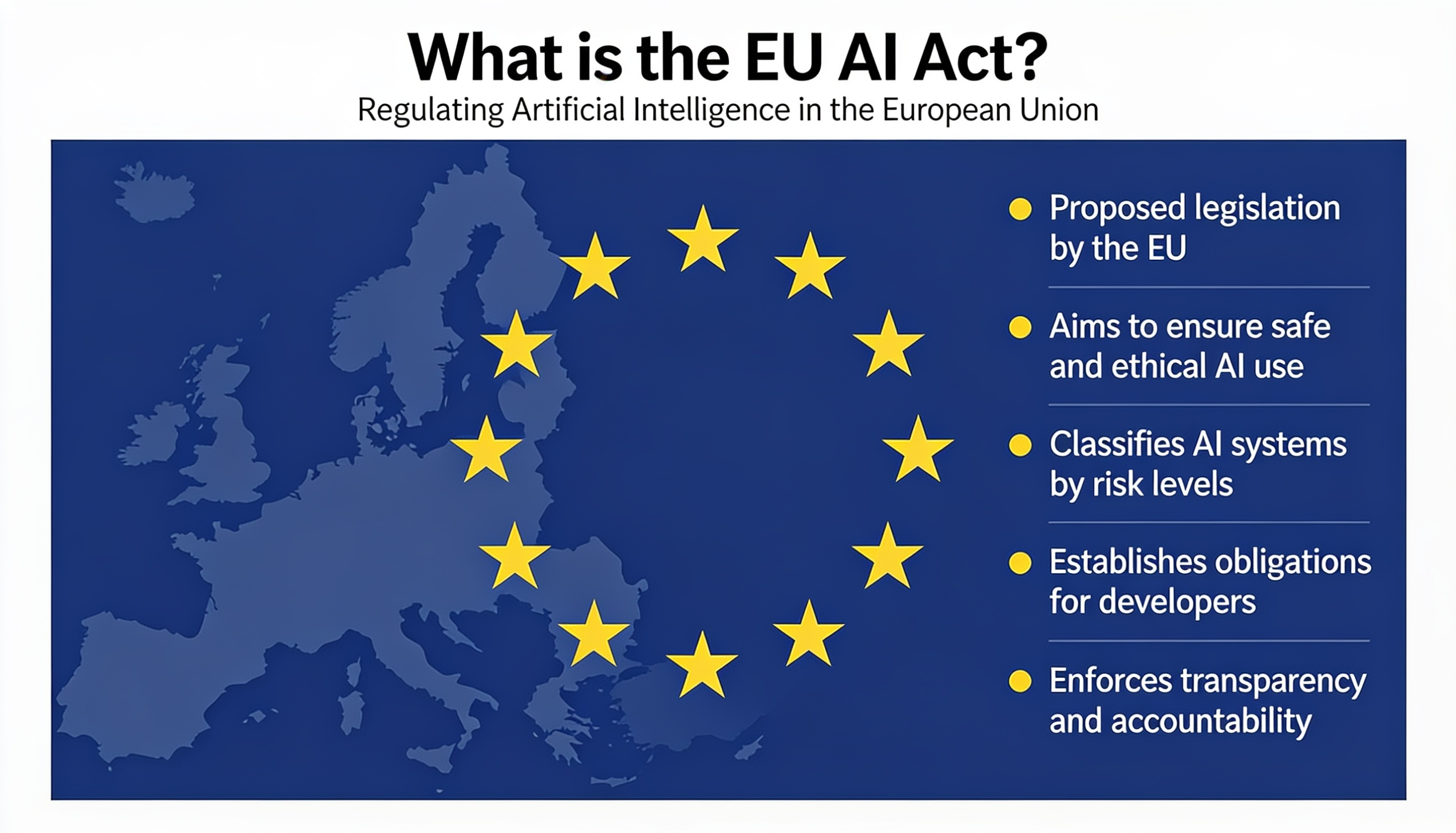
The EU AI Act (formally known as Regulation (EU) 2024/1689) is the world's first comprehensive legal framework governing artificial intelligence. The European Union finalized the regulation in August 2024, and most of its provisions will be enforceable from August 2nd, 2026.
The Act uses a risk-based approach. AI systems are categorized into four tiers: unacceptable, high, limited, and minimal risk — with obligations that scale accordingly. While prohibited practices have been enforceable since February 2025, the rules for general-purpose AI models came into force in August 2025. The remaining obligations, including those for high-risk AI systems, will apply from August 2nd, with other obligations for general-purpose AI following on December 2nd, 2026.
The Act introduces requirements that extend well beyond what existing privacy regulations cover: technical documentation, data governance, transparency, human oversight, post-market monitoring, and conformity assessments for high-risk AI systems.
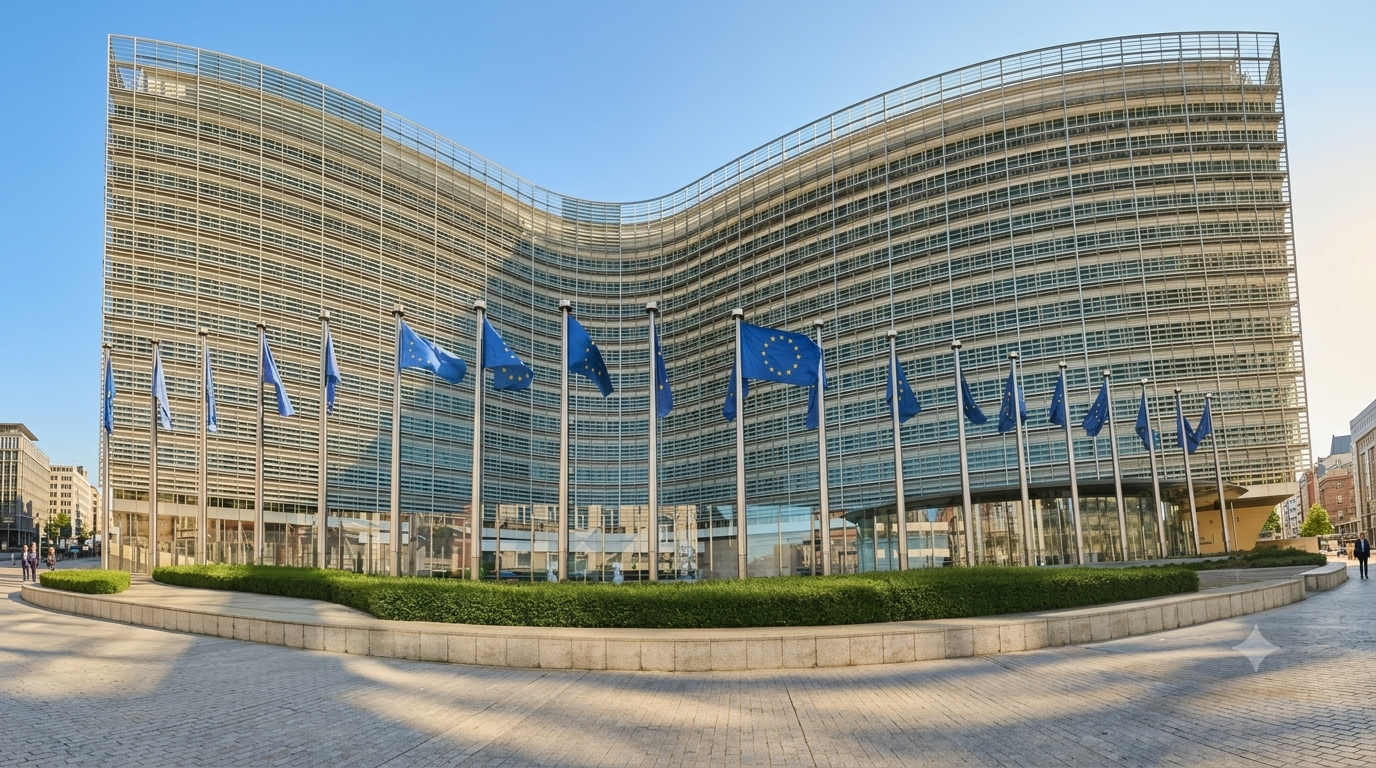
Yes, and this is the part most African enterprises miss. The EU AI Act does have extraterritorial reach. It applies to any organization whose AI systems are placed on the EU market, used within the EU, or affect people in the EU, regardless of where the organization is based.
For African organizations, the trigger is not physical presence. It is the customer footprint, the data flow, or the AI output that reaches an EU user. If your AI system makes decisions about an EU resident, processes data belonging to an EU customer, or operates within an EU jurisdiction, you are within scope. The compliance obligations apply to your organization as if you were headquartered in Frankfurt or Paris.
The most common scope triggers for African enterprises are:
Most enterprises in these categories have done some level of GDPR work, but have not extended the analysis to the EU AI Act. The two regulations overlap on privacy but diverge significantly on AI governance, which means GDPR readiness does not automatically equal EU AI Act readiness. That distinction matters for the next question: penalties.
The fine structure is categorized by severity.
For violations of the prohibited practices, penalties can reach up to €40 million or 7% of global annual turnover, whichever is higher. For non-compliance with data governance requirements under Article 10 and transparency requirements under Article 13, the ceiling is €20 million or 4% of global turnover. For all other obligations, the ceiling is €10 million or 2% of global turnover.
These ceilings apply to global revenue, not EU-derived revenue. This means an African enterprise with €500 million in global turnover, of which €20 million comes from the European market, can still face a fine calculated against the full €500 million.
Enforcement is carried out by national market surveillance authorities within the EU, coordinated through the European AI Office. The supervisory architecture is similar to that of the GDPR, meaning African enterprises that have been on the receiving end of GDPR enforcement actions will recognize the mechanics.
The regulatory landscape African enterprises face is converging rather than diverging. Most African data protection laws (Nigeria's NDPA, South Africa's POPIA, Kenya's DPA, the UAE's PDPL, Egypt's PDPL, and Saudi Arabia's PDPL) are modeled on GDPR principles. The EU AI Act extends those principles to AI-specific governance, and the convergence is producing a unified set of expectations rather than separate ones.
AI systems complying with EU AI Act standards tend to align with the expectations set by African regulators' frameworks. Frameworks like the UAE's AI Ethics Guidelines, Kenya's draft AI policy, Nigeria's National AI Strategy, and South Africa's AI policy all highlight the same key principles enshrined in the EU AI Act: accountability, transparency, robustness, fairness, and human oversight.
For enterprises operating across multiple African jurisdictions while serving EU customers, the most efficient path is to design AI governance in line with the strictest applicable standard (the EU AI Act) and then map that program back to local requirements. The reverse approach (designing for each jurisdiction separately) produces operational duplication and increases the likelihood of gaps.
The work required to be EU AI Act-ready can be divided into five practical steps:
Inventory every AI system in use across the enterprise
This includes those systems procurement isn't tracking. Shadow AI is the largest source of unknown scope exposure. List the model, the data it processes, the population whose data it touches, and the decision it produces. Then assign an owner for each system and confirm the next compliance action.
Classify each AI system by risk tier under the Act's framework.
The high-risk tier (Annex III) is where most regulatory attention concentrates. Systems that touch credit decisions, employment, access to essential services, biometric identification, or law enforcement are almost certainly high-risk. Systems used for spam filtering or back-office automation are usually minimal-risk. Then prioritize the high-risk systems for review and remediation.
Implement the AI-aware privacy infrastructure the regulation expects
The EU expects continuous data discovery and classification, anomaly detection on data flows feeding AI systems, audit-ready evidence collection, and quantitative intelligence for high-risk decisions. You must also be able to verify that each control supports monitoring and evidence collection.
Document data lineage and oversight
This explains what data trained each model, what factors affected decisions, and how human review is involved. Currently, most enterprises cannot answer these questions about their AI systems in production. The documentation needed is more extensive than GDPR requirements. Then proceed to address any gaps in the evidence.
Establish continuous monitoring.
The Act expects continuous oversight of high-risk AI systems after deployment, including performance drift, bias detection, and incident reporting. This is operationally more efficient than periodic privacy impact assessments. Then set an escalation path for issues identified during monitoring.
Keep in mind that companies that start this work earlier are better positioned than those that begin later.
The five preparation steps above are not five projects. They are one infrastructure question. That shift makes compliance work manageable.
Compliance, legal, data science, and security teams have historically managed AI governance through separate systems — model registries in one place, privacy assessments in another, audit evidence in a third, incident response in a fourth. The EU AI Act assumes these capabilities operate as a single continuous workflow. Enterprises that have built AI-aware privacy infrastructure are positioned to meet regulatory requirements by operating their environment rather than running a separate compliance project alongside it.
What that infrastructure does, concretely: AI itself maps where personal data sits and which AI systems consume it. Behavioral analytics monitor for unusual access patterns and exfiltration on the data flows feeding AI training and inference. Cross-jurisdictional breach response maps obligations across the GDPR, EU AI Act, NDPA, POPIA, UAE PDPL, and Kenya DPA simultaneously, rather than producing five separate workstreams. Privacy-preserving techniques — federated learning, differential privacy, tokenization — enable AI to be useful without aggregating personal data into a single attack surface. Explainable AI tooling produces the reasoning the Act expects by default, rather than as a retrofit under regulatory pressure.
Our newest whitepaper, [INTERNAL LINK: How AI-Driven Privacy Solutions Enhance Digital Trust in Modern Enterprises], makes the case for this architecture in detail — with implementation case studies from healthcare, finance, and telecommunications across the MEA region.
For African enterprises with European customers, the choice in the next six weeks is straightforward: begin the work, or absorb the regulatory risk. Either is a defensible position. Neither survives a Q3 board meeting where someone asks whether an AI inventory has been completed. Cybervergent unifies the AI-driven privacy infrastructure the EU AI Act expects into a single platform — across discovery, monitoring, response, and oversight. To see what that looks like for your enterprise, request a demo or download the full whitepaper here.